顯示具有 - 老媽廚房 標籤的文章。 顯示所有文章

2008/01/13

蒸蛋捲 - Steamed Egg Roll

我想應該沒什麼人有看過這道菜,因為從小到大也只有在自家吃過,不論是在餐廳用餐或在別人家作客,都沒有見過(不過後來看到有些簡體字網頁有介紹,看來的確是從中國大陸傳來的),所以國外應該更是不可能出現。遠看蒸蛋捲好像是長條狀的蛋包飯,我媽通常會再切成一段一段,橫切面就像壽司一樣,蛋皮包著肉餡一圈圈螺旋延伸。

基本上蒸蛋捲的材料和味道幾乎與火鍋中的蛋餃一模一樣,而且據說以前也都是過年的場合象徵黃金財寶的一道菜。不過蛋餃是蛋皮多於肉餡,而蒸蛋捲則是肉餡多於蛋皮,因此愛吃肉的人應該會比較喜歡這種份量比較紮實的蒸蛋捲吧。
其中蛋皮準備起來算是比較簡單,但要做出色澤漂亮的蛋皮也得靠經驗。而肉餡作法有點像是餃子餡,但最大的不同是餃子餡會放蔬菜,因此會加上麻油,但蛋捲餡是純肉不放油。然而要注意別把肉伴的太散以免熟了之後肉餡散開,還有因為肉多皮少,所以不能挑太瘦的肉,也可以加點太白粉和水,要不然口趕會太澀不潤口。當然肉餡裡面要加入什麼調味料就是看各家口味和手法啦,一般會加入鹽、蔥等調味料,我媽通常會再加上薑末,在網路上還看到有加上玉米粒、山藥塊、蝦米、干貝等等。我看做給外國人吃是不是要把豬肉換成牛肉、蔥換成洋蔥,然後加入玉米粒,最後蒸出來在淋上蕃茄醬,那就變成西洋蒸蛋捲,哈哈 :p

當然現在不需非得在過年才吃到這道菜,因為捲好之後只要放到電鍋裡跟白飯一起蒸就好了,所以已經變成家常菜可以常常在餐桌上吃到,反而過年的時候看不到,而是作法比較麻煩的蛋餃取而代之,也許以後可以來介紹我爸的招牌蛋餃囉。

2008/01/04

葡式蛋塔 - Pastel de Nata (Portuguese-style Egg Tart)

葡式蛋塔在幾年前曾造成全台大流行,不論是專賣店、蛋糕店、小攤販、連速食店都要參一腳,就算不是家家戶戶都在賣蛋塔,那也幾乎是家家戶戶都在吃蛋塔了吧!可惜好景不常,蛋塔熱就如同荊軻刺秦王~一去不復返,現在只有某家速食店撐了下來,每幾個月就出一種新口味。好加在我家的超級老媽也在那熱潮中把葡式蛋塔學了起來,讓我們在老媽要請客愛現的時刻可以沾光吃到熱騰騰的葡式蛋塔。##CONTINUE##

由名稱可知發明者為葡萄牙人因此稱為葡式蛋塔,後來傳到葡萄牙殖民地~澳門,之後才流行到其他亞洲地區。
跟傳統蛋塔不同的在於使用酥皮當作塔皮,吃起來外酥內軟是其特色。自己在家做酥皮當然不簡單,不過到蛋糕材料行都可以買到酥皮棒,其實就是把用來做酥皮濃湯的酥皮片捲成棒狀,當要烤蛋塔之前切成圓餅塊狀,用手推壓至模型上,簡簡單單就完成現成的塔皮了。這種作法反而比傳統蛋塔簡單,因為傳統蛋塔皮沒有在賣,還得自己作,麻煩的多。
內餡也就是一般的奶黃餡,基礎材料不外乎牛奶、蛋黃、砂糖這三劍客,不同喜好可以調整各自比例。
最後把內餡到入塔皮烤至表面有點焦黃就代表正字標記的葡式蛋塔出爐囉!這種簡單易學的糕點也就使得當初人人都能開蛋塔店、店店都能賣蛋塔。不過真正頂級的蛋塔當然不是看看我寫的文章就能做出來的啦,除了奶黃餡的札實程度是很重要的(不加一滴水),酥皮要烤到吃起來層層酥脆分離還真需要一點功夫,尤其是買回來的冷凍酥皮棒,切成塊後一定得完全退冰後才能送入烤箱,否則等到表面已焦黑可是酥皮卻會像被大地震震垮的大樓般層層黏合無法分離,如同吃泡水酥皮蛋塔,雖不難吃但口感便差一截。

當然現在可以看到廣告中有更多的口味:咖啡、蔓越莓、黑糖、楓糖、焦糖、最新的麻糬,企圖吸引你的眼球,進而迷惑你的舌頭。不過我娘也不是省油的燈,看到廣告中的麻糬蛋塔後,馬上發揮華人「不抄襲非好漢」的精神,當天晚上那廣告上看起來香噴噴的實品就進到我們嘴裡,麻糬不但非常融入奶黃餡的味道,更令人驚訝的是還加強了內餡的口感,吃起來更綿密香甜,天哪!如果我再也吃不到了怎麼辦...

不過我個人還是比較喜歡傳統蛋塔,因為味道更濃厚,適合重口味的人,下次有機會再來介紹其他傳統蛋塔。

2007/11/20

油飯 - Glutinous Oil Rice

平常能吃到油飯的日子不外乎某人小孩滿月送禮,或出門在外肚子餓去找的小吃攤,我也是有在大飯店吃到大廚精心烹飪的高級油飯,但怎麼都沒有老媽做的這麼和自己的口味,真是奇怪。網路上說除了寶寶滿月會吃到油飯,有些人在七夕的時候也會拿油飯來祭拜,但怎麼樣都查不到由來,只知道油飯已經算是年代久遠的傳統食物。##CONTINUE##
油飯的主要食材當然是糯米啦,之前介紹粉蒸肉的時候有介紹過糯米,果然不久之後就有一道糯米做的菜了。其他的材料還有豬絞肉、香菇、蝦米、紅蔥頭等等。這次介紹的重點就擺在會讓油飯香噴噴的香菇和蝦米身上,這兩者在許多菜中會同時使用來提升香味,當然其他的配料也不能少,但因為篇幅的關係沒辦法通通介紹。

香菇在中華料理中是很普遍的食材,有點像是西餐裡的磨菇,因為本身味道不重,卻含有淡淡清香,雖無法被當作主菜,但不論是擔任第二主角或第一配角還是臨時演員,都是非常敬業而且效果極佳。平時為了保存運送方便與增加香氣,會把採收的香菇脫水乾燥,當要使用時再泡水回潤,這時因化學作用香氣會更加濃郁。

蝦米的資料就不多了,只知道小如米粒般的蝦仁曬乾或烘乾後即成為蝦米。蝦米也是有一股特殊香味,但不知是曬乾過程中自然產生還是有特殊製作過程。小時候我很討厭蝦米的味道和口感,總覺得有一股臊味,吃起來也硬硬的,尤其是跟大白菜一起炒的時候最奇怪,軟軟的大白菜夾雜著脆脆的蝦米,怪噁心的,不過配在油飯裡的感覺還不錯。 圖片裡的蝦米比較大,應該叫做乾蝦仁了啦 :p

台灣本地的筒仔米糕跟油飯很類似,可以想像成放在竹筒裡的油飯,但沒有放蝦米也比油飯要濕潤些。筒仔米糕跟油飯一樣在吃的時候加點甜辣醬,那滋味更棒,不知道老外喜不喜歡這種吃法?

2007/11/18

梅乾扣肉 - Pork Steamed with Pickled Mustard Cabbage

[中文]
不知道大家有沒有認出來這黑黑髒髒的菜是什麼,外國人會不會以為是從廚餘桶拿出來的,不過可別小看這道看似堆肥的菜,它也算是大名鼎鼎在中式餐廳菜單中不會遺漏的「梅乾扣肉」。雖然我媽做的沒有餐館裡的上相,也省略了一些步驟,但好吃的程度卻不輸餐館。##CONTINUE##
據我媽講述以前奶奶做梅乾扣肉的正統作法,還真的是費工費時,果然通常是上館子才能吃到的手工菜。
選擇肉質佳的五花肉不說,一定要皮、肥肉、瘦肉層層相扣才會好吃又好看,平常餐廳為了賣相,會把肉切成片狀,但在家裡為了方便入口,會切成稍大於拇指的塊狀,這樣吃飯的時候就不需用筷子切成小塊。接下來可不是直接把肉拿去紅燒,而是先把五花肉下油鍋炸,此步驟不只可以把肉汁封住,也可避免久煮過爛。接下來就是把肉紅燒,「紅燒」似乎是烹煮肉類菜餚的必備過程,我之前也介紹過紅燒排骨,只不過沒有詳細解釋燒法。
再來就是稍微料理「梅乾菜」了,可以加點紅燒滷汁下去炒。接下來把滷好的肉排列在盤底和盤緣,再把梅乾菜放入其中,拿到電鍋或蒸籠裡蒸,出爐之後反扣到盤子之上,所以剛剛肉片排列組合的越整齊的話,你反扣出來的花樣就越漂亮囉!「反扣」這個動作也就是梅乾「扣」肉之所以不叫「梅乾菜蒸肉」、「梅乾紅燒肉」等等的名字啦!

這道菜特別的食材當然就是梅乾菜啦,因為外表看起來又黑又破的看起來像發霉,因此又被叫做「霉」乾菜,老外可能真的不敢吃這種發霉菜,不過我們也不敢吃他們發霉的藍紋乳酪呀。
梅乾菜算是一種醃菜,用鹽水把芥菜醃成鹹菜之後再曬乾,如果不曬乾繼續發酵之後就會變成酸菜,所以這些醃菜本身就有鹹味,有時太鹹還要先洗一洗,這裡有介紹梅乾菜的作法喔。

光是介紹這到菜就讓我費盡唇舌,可想見真的是一道麻煩菜,不過我媽總是可以化繁為簡,省略了頭尾兩個步驟,也就是一開始不用炸,最後也沒有擺盤更沒反扣,反正又不是請客,不用太漂亮好吃就好 :)

[English]
Don't belittle this bad-looking dish. Even though it looks dirty and decayed, it's a famous Chinese course. We call it "Buckle Pork with Mei-gan", which directly translated from Chinese name. Mei-gan is a sort of pickled vegetable and sounds like a female's name "Megan" :p I will introduce Mei-gan vegetable and explain why named "Buckle Pork".

A classical "Pork Steamed with Pickled Mustard Cabbage" is a time-consuming dish and need a complex procedure. According to my grand mom's recipe: besides choosing a good pork side, the side with skin, fat meat, and lean meat have to be layers of clear. So that Chinese call this cut "Five Pattern Pork" or Taiwanese call "Three Layers Pork", which comes from multiple layers characteristic. In restaurants or for banquet, the cook would cut into thick slice for beauty. But my mom just cuts into cube as thumb size. It's convenience for eating and without chopping them.

Before stewing, the pork would be taken to deep-fried in order to seal up the meat juice and avoid over cooking. The next step is to stew them with soy sauce and other seasonings, almost similar to "Stewed Pork with Brown Sauce". This step seems to be a groundwork of meat cooking. The color, luster and the taste, texture all depend on this stew process.
After that, neatly and separately arrange pork slices on the plate and put Mei-gan vegetable onto meat. Then place it into steamer and wait. Finally, after steamed pork is done, put another plate upside down on the top and buckle two plates with your hands and then turn them over. While you take the above plate away, a delicious "Buckle Pork with Mei-gan" is done. Now you understand where the name "Buckle" comes from.

You must be curious what the Mei-gan vegetable is. The title leaks answer. It made by a sort of Mustard Cabbage, whose seeds can process to mustard. Chinese pickle leaves with salt and then dry them until black. The "gan" of Mei-gan (乾) means "Dry". The "Mei" has two stories. The first "Mei" (霉) means "Mold" and describe its moldy appearance. The other "Mei" (梅) is "Ume". According to legend, Chinese made Mei-gan vegetable when the fruit of Ume is ripe.

2007/11/07

老媽咖哩 - Mom's Curry

[中文]
  這一次的主菜就是各地都很熟知的「咖哩」啦!上次去捷克旅遊的時候也有餐廳在賣咖哩,下次有機會把照片翻出來介紹介紹。這次的重點就先擺在「台式」咖哩的介紹和我們家比較特殊的作法。##CONTINUE##
  大家應該都知道咖哩是起源於印度,據我上次出差印度的同事回報,的確在印度什麼都要配咖哩,真的很像我們什麼都要配醬油一樣。而印度本地的咖哩是又鹹又辣,這不僅是我同事這樣說,小時候我們全家去永康街印度人開的餐廳吃咖哩飯,味道是很香很濃沒有錯,但也真的很嫌很辣足足讓我配了好幾碗飯,咱們台灣人可能不喜歡,但這種味道應該才是正統。
  除了印度咖哩之外,東南亞的地區似乎也常吃咖哩,可是「南洋」咖哩的作法似乎用上了他們當地最普遍的食材~椰奶,因此他們的咖哩比較稀,也沒有這麼鹹,但卻還是一樣辣。
  而對台灣人而言,「日式」咖哩也是常常吃到,不知道是不是因為日本人愛吃甜食,日本的咖哩也比較甜一點,通常加入了蘋果或其他水果,而且沒有這麼辣,配上日式炸豬排也會令人垂涎三尺。
  台灣不愧是美食王國,這幾種不同的咖哩都可以吃的到,不過似乎為了迎合台灣人的口味,在台灣吃到的咖哩沒有印度咖哩這麼辣、沒有南洋咖哩這麼稀、也沒有日式咖哩這麼甜,這算是三不像還是「台式」咖哩勒?

  我媽燒的咖哩符合了我們家的口味,也接近台式咖哩的味道,所以通常是先到超市買日式咖哩塊。用日式咖哩塊的好處是裡面都已經含有水果成分,之後不用去特別增加甜味,而且日本的東西品質也比較好。咖哩塊買回家之後並不急著就開始煮咖哩囉,而是先初步紅燒肉塊、馬鈴薯、蘿蔔等等,這樣之後吃到的肉或馬鈴薯就會比較入味,而且可以加重日式咖哩不足的鹹味(我們家就是重口味啦)。因為我們家吃的比較辣一點,所以加入咖哩後會在加辣椒粉或是一開始就買辣味的咖哩塊,如此可以提升日式咖哩的辣味。這樣的作法就滿足了我上文提到「三不像」台式咖哩的條件啦!
  我們家的咖哩還有一個特殊的地方,就是比一般的咖哩都要「濃稠」,有時要從冰箱裡拿一點出來伴飯,還沒辦法用倒的,因為你根本倒不出來,一定要用湯匙挖,很像挖冰淇淋的感覺,可是冰淇淋拿到室外會融化,但我們家咖哩還不會融化喔!一定要加熱之後才會有「醬汁」的感覺!不過這樣伴起飯來卻更有味道,更讚更好吃啦!哈哈哈!(迷之音:又在得意了)

[English]
  Curry is a well-known dish or sauce all over the world now. I have eaten curry in a restaurant in Czech when visiting Eastern Europe. Maybe we'll have a page to introduce that dish someday. Today, I still focus on my mom's curry and talk about our Taiwanese favorite flavor.

  Every body knows Curry comes from mysterious India. According to my colleague who have been India for business, Indian eats everything with curry (and by their hand), just like Chinese eats everything with soy sauce. In addition, Indian curry tastes very salty and spicy but I think that heavy savor is classical curry.
  Besides India curry, another style of curry is common in Southeast Asia, such as Malaysia, Indonesia, Thailand; we call South Pacific Ocean (南洋) Style. Locals add their most common material - coconut milk to the curry and you can smell its distinct fragrance. The Southeast Asia curry looks more dilute than traditional India curry but tastes still hot.
  Another popular style in Taiwan is Japanese curry. Taiwanese loves Japanese food very much because our tastes are similar. The characteristic of Japanese curry is that you can find a little sweet in it. Japanese would put fruit, apples usually, or honey in curry. I don't know if it causes by they like a lot sweet stuff :p So that Japanese curry is less salty and spicy than India curry.
  What a food kingdom Taiwan is. You can eat all styles here. However, most Taiwanese don't like so salty and spicy food like Indian; not like sweet stuff like Japanese, either. Most curry dishes in Taiwan are localized from Japanese curry and a bit more salty. I tentatively call that style the "Taiwan curry".

  My mom's curry can be regarded as Taiwan style. First, she bought a curry sauce cube (like bouillon cube) at supermarket. We always buy the Japanese curry cube because our taste is more similar to Japanese's and the food made in Japan means elaborate and dainty. After that she was not eager to boil curry sauce but prepare main materials. My mom would cut the meat, potato and carrot into cubes; then stewed them with soy sauce like the beginning step of "stewed spareribs with brown sauce" in order to let the meat and vegetables more savory. Finally put the curry cube and other seasonings. If you like hot, you can put spicy powder. If you want to eat Southeast Asia style, you can put coconut milk. It's delicious to put the cheese as well. (We learned from a certain restaurant.)

A curry recipe reference

2007/11/03

蛋黃酥 - Taiwan Mooncake

[中文]
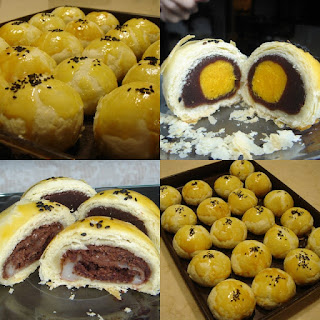
我今天加班一回家就眼睛一亮,哈哈,我有新東西可以寫了,原本以為要等到明年中秋節,沒想到我媽今天就心血來潮做了一大盤,我可有口福了,你們也有眼福囉! ##CONTINUE##


我們一看到照片當然就知道是「蛋黃酥」啦,但外國人可不見得,不過就算常吃蛋黃酥但大部分的人也都要等到中秋節,不像我可以在寒冷的冬天吃到熱騰騰的蛋黃酥(流口水啦)。而我媽這次做了三種口味,當然也是一步步開發而來的。第一種就是最普遍的「豆沙蛋黃」,最近流行低膽固醇食品,因此使用了素蛋黃也就是用起司做成的冒牌蛋黃,不過還好吃起來真的差不多,也多了一股香味;另一種是最近也滿流行的「豆沙麻糬」,以前有做過麻糬包豆沙、豆沙包麻糬,但最好吃的方式就是豆沙包麻糬再包豆沙,也就是最費工的三層餡,這次也是這種包法,我的口水又止不住啦;第三種口味就是我媽自己喜歡的芋頭餡料,喜歡芋頭的人也不能錯過。有時候我媽沒偷懶的話,豆沙或芋頭沙還會自己做,不過大多時候都沒空,所以還是到外面買豆沙或芋頭沙。

蛋黃酥應該算是月餅的一種,但查了半天也不知道其由來何方,只知道是道道地地的台灣味。我吃過的月餅只有這種蛋黃酥類的和廣式月餅類的兩種,蛋黃酥類的還有吃過綠豆碰和冰沙餡餅,廣式月餅就是蓮蓉、棗泥等各種口味,再加上最近流行起各式各樣亂七八糟的變種月餅,還真是令人眼花撩亂,但最後還是覺得最傳統的烏豆沙蛋黃的蛋黃酥最好吃 (Y)

蛋黃酥最重要的就是它的皮要考的酥酥脆脆,這都要靠肥死人不償命的酥油來達成目的,再包入高熱量的豆沙和高膽固醇的鹹蛋黃,外皮擦上油油亮亮的蛋汁,再灑點富含油脂的芝麻,這就是讓吃不飽的古人偶而增添能量的聖品,但對脂肪過於囤積的現代人來講,就只能小心翼翼的淺嘗即止了。不過我可以體會美食當前卻得坐懷不亂的痛苦,所以我等一下要再去吃半個好了 *-) (迷之音:真的只吃半個嗎)


[English]
Here a special new thing comes, the Taiwan mooncake! The Mooncake is one of traditional Chinese dessert especially for Mid-Autumn Festival. I don't want to explain this festival now, maybe next year instead. Although Mid-Autumn Festival already passed (August 15 in Chinese calendar), my mom still bakes them to feed us like pigs :p In fact, she will give some to her friend as a gift. As you can see, the appearance in my picture is very different from that in Wiki because this one we eat is Taiwan Style and we call it "Yolk Pastry".

You can understand the key point of Taiwan mooncake from its local name: "yolk" and "pastry". The most common and traditional way is to fill with sweet bean paste and a salted egg yolk inside. The black bean paste and yellow yolk represent dark sky and a light moon respectively. Besides, the salted egg yolk is able to balance the sweet of bean paste. Nowadays, fat people so afraid of Cholesterol, especially in egg yolk, that we can buy fake yolk instead. It made by cheese and smells better. The other primary role "pastry" is the most difference from other styles mooncake. Only the skin of Taiwan mooncake made by puff pastry, just like another famous Taiwan dessert "Suncake". The puff pastry skin looks laminated as thousand skin and tastes crisp.

The mooncake has a variety of fillings from traditional ones "Lotus Seed Paste" or "Jujube Paste" to modern ones "ice cream" or "coffee". My mom also bakes a very popular sort this time: "Bean Paste with Mochi". This way comes from Japanese style and has an effect that balance sweet like yolk. Some people enjoy the taste combined with crisp pasty and sticky mochi. In addition, my mom bake her favorite filling, Taro Paste, too. However, I still prefer the most traditional one, sweet bean paste and egg yolk.

2007/10/25

粉蒸肉 - Steamed Pork Slices with Glutinous Rice Flour

[中文]
粉蒸肉也是我很愛的一道菜(迷之音:你哪道不愛),因為有外層的調味糯米粉包裹,所以更有味道也更下飯,換言之就是味道更重啦。粉蒸肉以前算是麻煩菜吧,肉要先醃過就算了,要調理出絕佳的蒸肉粉更是門學問,不僅加入的調味料多樣又複雜,而且要調出漂亮的比例那更是需要豐富的經驗。##CONTINUE##
我查了一些資料,粉蒸肉的做法還真是五花八門,光是配料就有好幾種組合,不過一定會有的就是五香粉和糯米粉。而糯米粉似乎也有分租細,有些就真的是粉狀,但我媽用的是還有顆粒狀糯米的蒸肉粉,這種口感比較好,有點像是配著飯吃肉的感覺,味道更豐富。還好現在都有現成外賣的可以用,我媽就是直接去買辣味的蒸肉粉,要不然生在古代我應該沒辦法常常吃到這到菜了吧!
糯米應該算是真正的華人食物,除了韓國人死鴨子最硬非要宣稱粽子也是他們發明的,我想沒有任何人反對吧,畢竟我們用糯米做出來的食物數也數不完,除了最有名的粽子、湯圓,還有酒釀、年糕、米糕、麻糬、油飯、糯米腸等等等(原來我還有這麼多題材可以寫)。
除了用的蒸肉粉千變萬化之外,搭配的副菜也是令人眼花撩亂,從最傳統的荷葉粉蒸肉,到富涵台灣味的地瓜粉蒸肉,還有看到搭配南瓜的金瓜粉蒸肉,不過我媽當然是什麼都沒配,直接放在電鍋裡和白飯一起蒸囉。

這邊有別人推薦的蒸肉粉牌子,可以參考看看。

[English]
You can see the yellow one, the minced pork with corn, and green one, Chao vegetable. A small piece of stewed spareribs with brown sauce lay on top right. Only one dish is new of today's lunch, which is "steamed pork with glutinous rice flour".

This dish has a distinctive appearance because the glutinous rice flour should be covered over meat. The white grain you can see is glutinous rice which play a main role of flour.
The glutinous rice is undoubtedly a genuine Chinese food. There are a lot of food made by it, such as "Zongzi", "Tangyuan", the most famous traditional Chinese food, and others less famous but common food. (It means so many food wait for my introduction:p) This rice is a special sort of rice and would become sticky after heat. That's why call it "glutinous rice". Because of its sticky feature, over-eating may cause indigestion.

Except glutinous rice, other seasonings are important in flour, too. Very many combinations of seasonings are used and bring many flavor on this dish. However, the five-spice powder is most often used in every combinations. If you want to find out the best steamed pork flour, an abundant experience is indispensable. I can image how hard to cook this dish for my forefathers because of complex procedure. I couldn't have change to usually eat "Steamed Pork Slices with Glutinous Rice Flour" if I was born in ancient time. Fortunately, we have instant flour package nowadays. My mom just marinates meat and covers ready-made flour. Then put it into TATUNG steamed cooker. Finally, I can eat a savory Steamed Pork Slices with Glutinous Rice Flour.

In addition, before steaming, you can wrap the meat with lotus leaves for traditional Chinese style, or put some sweet potato under the meat for Taiwan style, or substitute pumpkin for sweet potato. It's more complicated but more delicious.

2007/10/22

Bamboo Shoot with Sliced Pork - 竹筍炒肉絲

[English]
The bamboo shoot with sliced pork is above, the middle of the stewed spareribs with brown sauce I introduced before, following fired vegetable, and the roe lay on the right.
##CONTINUE##
Every Taiwan child has heard of this dish even if he or she has never eaten. It's a funny extended meaning. We usually use "meat"instead of "pork" for Chinese food name and put the word "fry" into the major and miner material names. We also cut the meat into strips. So for example of directed translation, the "Chao bamboo shoot with sliced pork" would become a "bamboo shoot stir-fries meat strips". Besides, earlier on, Chinese teacher often punished students by slashing their palms(fingers) with bamboo pole. So use your imagination. A punishment that a bamboo is swung over some fingers(meat strips) becomes a name of a dish. This course is so popular but not because people like it; instead children hate it. :p

I have never seen foreigners eat bamboo shoot. Of course, I have never seen the bamboo except in Asia. The bamboo shoot tastes crisp and a little sweet. Sometimes we eat just with salad scream while finding the superior one, in order to enjoy its original flavor, juicy and tasty. It is also very suitable material for soup. The essence of bamboo shoot could be enhanced by simmering. Even though flavored with soy sauce, its fresh and juicy characteristic can make a dish more delicious.

[中文]
今天來講講有名的竹筍炒肉絲,尤其是在以前還沒有什麼「愛心教育」之前最有名,為什麼有名呢?當然是因為這個名字也是體罰的代名詞啊。外國人一定很好奇為何被老師打手心要叫做竹筍炒肉絲,這當然是因為以前那個年代,老師都會準備一支棍子,用來處罰不聽話或考不好的學生,而當時竹棍最普遍,打在那可憐學生的小小手掌上,一定也會打到手指啦,所以竹子在肉條(手指)上揮舞就是這到菜的由來啦。你問我愛不愛吃?我只愛吃我媽煮的,不喜歡老師給的。(迷之音:怎麼以前老師總覺得你很喜歡,時常來領「賞」)
在國外好像沒有看到老外在吃竹筍,不過除了亞洲好像連竹子都沒有,那沒吃過竹筍也是當然的囉!但在台灣應該從小就常常可以吃到,那脆脆的口感配上甘甜的味道,如果能買到上等貨就直接切塊加點沙拉醬涼拌,要不就煮筍湯,都可以吃到原味也就是筍的精華。那就算拿來紅燒或炒肉絲也都因為它那清新的特色而不會油膩,真是好吃又健康的食材呀!

2007/10/18

Chao eggplant with hogs' intestine - 茄子炒大腸

[English]
Here are three dished in my lunch: Zha(pan-fried) pork, Jian(deep-fried) tofu, and Chao(stir-fried) eggplant with hogs' intestine. OK! I know the strangest one for foreigners is the fried eggplant with hogs' intestine. So let's talk about it. You can see it on the top of picture.
For Chinese food, eating eggplant and hog's intestine is very common. But I also eat the combination of them in my first time. My mother must buy the Chao hogs' intestine outside and then process it with eggplant. She, a career woman, sometimes prepared meals with ready-made dishes from whether overleft or outside to save her time.
In my impression, the eggplant I saw overseas is indeed round like an egg. I have eaten baked eggplant with cheese in western-style restaurant before. A ball-shape eggplant was cut half and covered cheese. I can't forget its savor smell so far. However our eggplant is long slender form like a cucumber and we cut it to block shape to cook. And the eggplant would become soft and meshed. Even many Chinese hate the eggplant. But I love meshed eggplant.
After hogs' diaphragm I introduced, the intestine of hog is the second organ of pigs I talk about. You can see how we like to eat the internal organ. Maybe foreigners regard them as offal but their nutrition and special taste lead them to become common materials. Furthermore, the large intestine of hogs is most popular organ in Chinese food. Many of famous dished are made by large intestine. Its chewing feeling is elastic but the superior one should be dissolved after chewing a few times. The best way you can figure out is tasting by yourself. Ha!

[中文]
煎豬排、炸豆腐、茄子炒大腸是今天的午餐,我想說老外一定覺得茄子炒大腸比較特別,所以就來介紹這道菜吧!本來茄子和大腸對我們來說都還算滿平常,但這次我媽把兩者混在一起炒就連我也沒吃過了,八成是用在外面買的大腸回家加工。對職業婦女來說,買外面的東西或是用剩菜來加工是簡單又方便。
我以前有吃過焗烤茄子,後來發現國外的茄子都是又大又圓,難怪它的英文名字叫「植物蛋」,真的跟雞蛋的形狀很像。但我們這邊的茄子好像都是長棒狀,然後都會切成塊狀煮來吃,煮完之後就會變的軟軟糊糊的,我個人還滿喜歡吃這種軟趴趴的茄子,可是有人就會覺得很噁心,我看外國人大概也食不下嚥吧!
上次介紹完豬肝連以後,這次講到大腸不知道有沒有把老外嚇到了,不過咱們本來就是很愛吃內臟的民族,當我在查「內臟」這個單字的時候,有一個字「offal」也是指牲畜的內臟,但也有廢物的意思,可想見外國人都把內臟當廢物處理。但對我們來說什麼器官沒吃過勒,尤其「豬大腸」應該是最常見用於食材的器官了,許多有名的食物都有大腸在裡頭。下次一定要介紹老外吃吃看這個有嚼勁的食物,不過也要拿好一點的給他吃,以免他咬不爛。哈哈!

2007/10/17

Tuesday Lunch - 週二午餐

> Fried pork with dried tofu
I love all soy food. We think the dried tofu is different from tofu, like tofu skin. Although they are made by the same material - soy bean, their shapes are unlike at all whether for looking or eating. You mush be amazed at what many varieties of tofu. The dried tofu is indeed made by dehydrating tofu, but I consider from cooking aspect the dried tofu should be classified to its own sort. It is because dried tofu is harder and more flavorful than normal tofu. It is hard so that can be cut to many shape, such as slice or stick. And its structure easily let seasoning into inside. We Chinese call this feature "flavor-entered". Furthermore, the number of dried tofu dishes are never less than that of tofu dishes.
In Dasi, one town of Taiwan, the residents even developed a special variety of dried tofu, called Dasi dried tofu, which can be treated (eaten) as a snack.
Of course, my mom fried dried tofu and pork with soy sauce and sometimes with chili. It is appropriate to eat with rice. Chinese says this dish is "rice-swallowed", means people can eat lot of rice with it.

[中文]
今天有三道家常菜,一個有香菇攪和著我看不出來的綠色青菜,這到菜不知怎麼介紹,下次要先問問大廚;而另一道麻婆豆腐雖然很有名,可是被塞在一個角落實在不上相;最後就介紹我也滿愛吃的「豆乾炒肉絲」。
豆乾的英文名字算是滿貼切的,就叫做「乾豆腐」,剛好豆乾的全名就是豆腐乾。豆乾製作過程跟豆腐大同小異,差別就是脫水脫的比較乾。我在wiki百科裡看到豆乾算是豆腐的某一個種類,可是若以料理的角度而非原料的角度去看的話,我寧願視豆乾是獨立出來的一種,就像豆皮。豆乾因為比較硬,可以切成很多形狀,而且組織比較鬆散,可以比較入味。(真不知道要怎麼用英文形容「入味」)
由於我媽是個職業婦女,能每天燒飯做菜就已經很了不起了,因此豆乾也沒有切的像餐廳一樣這麼細。還記得以前小時候上館子,全家人最愛去永康街附近的「六品小館」,他們家的豆乾炒肉絲真是一絕,豆乾切的跟肉絲一樣細,再加上小辣椒絲,真是下飯(這個詞又難倒我了,有誰位「下飯」的英文呀)。可惜後來換廚師之後味道就不如以往了。
我在文中也有提到大溪豆乾,不過這幾乎不像是菜了,反而像是零嘴了。

2007/10/12

Friday Lunch - 週五午餐

[English]
There are two kinds of fried vegetable, black pepper beef with onion, and fried eggs with soy sauce in today's lunch. Yes! My favorite fried eggs with soy sauce again. My mom would add this course to supply my lunch if dishes are not enough. Especially it is very simple and quick to deal with it.

> Fried eggs with soy sauce
Most time to fried eggs is just to put salt, not soy sauce. Mixing with soy sauce is our private dish. It is so easy that I could do it when I was a elementary school student. Sometimes we visited my uncle Yang when I was young, he would cook lots of fried eggs because he raised many chickens.
Another story for soy sauce is interesting. The importance of this sauce for Chinese is just similar to curry for Indian, cheese for European, and catchup for American (I guess:p). We almost cook everything with it. You can see my meals before; soy sauce is unavoidable everyday. Like cheese, there are so many sorts of it by difference of ingredient, consistency, brewing process and so on. It is mainly made by soy bean, but also made by fish or Kombu (a kind of kelp) especially in Japan. Because of brewing by salt, it tastes salty and comes little sweet like savoring wine. Hence when cooking, we usually replace salt with soy sauce. However, a bad soy sauce tastes only salty but not sweet. So the dish must fail, too.

[中文]
今天的照片是用手機拍的,所以有點模糊,而且下班回家後還有電視要看,本來一直在考慮今天到底要不要寫,但想說繼續偷懶下去的話,以後就會越來越懶,乾脆提起精神把它寫完。

> 醬油炒蛋
會介紹醬油炒蛋也是因為這個禮拜就吃了兩次,我是完全不會吃膩,但不知道其他人會不會好奇這到菜,因為平常看到的炒蛋頂多就是加點鹽,或加入其他食材,應該很少人跟我們家一樣是用醬油來炒蛋的。尤其這到菜的簡單易懂,成為我第一個會做的菜,小學在家就常給自己加菜。
另外這幾天介紹下來,發現「醬油」的使用頻率頗高,不愧是華人甚至東方人最愛用的調味料,不論煎煮炒炸蒸滷烤沾都有機會使用,我想大概就跟印度人喜歡用咖哩、歐洲人喜歡用起司、還有美國人愛用番茄醬(我猜的啦:p)一樣吧!而且廣義來說,醬油的種類可多的勒,不同的原料、濃度、釀造的方法都會成為不同的醬油,像是在日本還可以看到用魚或昆布做的醬油呢。
而好的醬油不只是有鹹味,還有甘甜的味道會慢慢散發出來,有點像品酒一樣,不過我不會用英文描述「慢慢散發出甘甜的味道」,有沒有人可以教我一下,像我直接寫「sweet」感覺很奇怪,好像在醬油裡面有加糖一樣。

2007/10/11

Thursday Lunch - 週四午餐

[English]

Because busy on Wednesday, I just took terrible pictures. You wouldn't want to see the fragmentary dishes. Anyway, I bring my lunch made by Wednesday overleft today and can still introduce my mom's works. So today's target I choose is more acceptable for foreigners.

> Steamed salted duck's eggs
As you can see on top right of my lunch box, this dish mixed yellow and white looks like a strange steamed egg. Chinese originally have a traditional steamed eggs. But my mom's way is a little different. She puts more ground pork and less water. Hence, it becomes drier than traditional steamed eggs.
In addition, salted duck's eggs are used instead of chicken egg. It tastes salty and has special flavor. The chicken egg has no savor like it. Furthermore, my mom uses soft boiled egg. The yolk is solid and white is liquid. Then put ground prok and a little salt to enhance the taste.
Finally, after steamed in TATUNG steamed cooker, a savory steamed salted duck's egg with ground pork comes out! And the steamed way is unusual for home dish, but usual for restaurant. It requests much works so that you can see that the most dishes I posted are fried, not steamed. However, the invention of TATUNG steamed cooker makes steaming convenient.

[中文]
星期三又因為回家太晚了,殘羹剩餚的照片實在不上相,而且這麼晚回家也沒精力寫了,乾脆跳過直接寫禮拜四的吧,反正今天便當就是帶昨天晚餐的菜。

> 鹹蛋蒸肉
你可以看到便當右上方黃白交錯的蒸蛋,這道菜應該比較特別,不僅是外國人,連台灣人都不常見吧!其實在某些餐廳或到香港去,可以看到很類似的「蒸水蛋」,我到香港有吃過一次,但是還是比較喜歡我媽煮的這道菜,因為她沒有放「水」或是「高湯」,所以蒸起來比較乾,而且還有放一點絞肉,吃起來很對味。
另外比較特別的是使用了「鹹鴨蛋」,但並不是平常配稀飯吃的固體鹹蛋,而是蛋白液體蛋黃固體的半生鹹蛋。而且對於我們來說,鹹蛋是鴨蛋還滿普遍的,雖然也有雞蛋啦,可是對老外來說鴨蛋就很特別了,尤其是鴨蛋的味道比雞蛋重,不過我說不上那是什麼味道。
最後放到電鍋裡蒸,香噴噴的鹹蛋蒸肉就出爐了。尤其是這種用「蒸」的方式比較麻煩,在一般家庭比較少見,大多數的菜還是用「炒」的居多,只有在餐廳或在香港才比較常見,還好有大同電鍋可以輕鬆的做出「蒸」的料理。

2007/10/09

Tuesday Lunch - 週二午餐

[English]

This is my lunch today. You can see fried vegetable, fried egg with soy sauce, and fried bacon with mungbean sprout. In fact, it is a good opportunity to explain significance of soy sauce for Chinese because I love the fried egg with soy sauce so much. However, I prepare to talk about it someday else when I have enough time. Now I want to talk about the other special dish.

> Fried bacon with silver sprout
We usually name mungbean sprout "silver sprout" because it looks shiny and glossy just like silver. And it sounds more expensive than cheap mungbean. A noble name is able to rise its value. The mungbean sprout which can grow up every place and every season is easily gotten. We even experimented with it in natural course while I was a elementary school student.
We eat soybean sprout, too. It is similar to mungbean sprout. But I doesn't like it because of too stony. In other words, the soybean sprout is hardly cook to soft and tastes raw.
Moreover, mungbean can mix with a lot of materials. Its chewing feeling, cheap cost, and appearance let mungbean sprout become a common dish in the menu of bargain restaurants.

[中文]
今天的便當有炒青菜、醬油炒蛋(有人沒聽過吧)和培根炒豆芽,本來可以趁機介紹一下醬油炒蛋,順便講一下我們東方人愛用醬油的歷史,但我可能要多一點時間準備,所以還是介紹另外一道菜好了。

> 銀芽培根
我特別使用「銀芽」這個在餐廳菜單上才會看到的名字,讓老外知道我們取名字是很有學問的,因為豆芽的顏色與光澤就如同銀絲一樣,取了這個名字就可以掩蓋豆芽本來的不值錢。尤其豆芽非常好種,不論什麼地點什麼季節都長的出來,想當年國小的時候都會用綠豆來做實驗,鋪個棉花就可以發芽變成綠豆芽了,難怪這麼便宜。
而豆芽除了綠豆芽之外還有黃豆芽,可是我比較不喜歡黃豆芽,因為它比較硬吃起來又感覺沒有熟,味道怪怪的,還是脆又不硬的綠豆芽好吃。
而綠豆芽可以搭配很多的食材,應該可以頒發最佳配角的獎項給它,像是它本身味道不重,外型又好看,口感也好,甚至自己當主菜也能夠勝任,因此變成自助餐廳中不可或缺的一道菜!

2007/10/08

Monday Lunch - 週一午餐

[English]

I brought my lunch from home today as usual. It's an opportunity to introduce some rest of yesterday's lunch because today's lunch was made from Sunday's leftovers. Except stewed spareribs with brown sauce, there are fish stick, fried cabbage and fried pork with corn. So today, I just talk about my second favorite, fried pork with corn.

> Fried pork with corn
The word "Fry" seems not to be able to explain the Chinese cooking way because more than three sorts of cooking in hot oil translate into the same word, all called "fry". The first one and also most common one, fast cooking with big fire by turning over and over, is called "Chao". The key point is "turn over". The second one, cooking with much oil such as fried chicken and French fries, is called "Zha". The key is much oil usage. The third sort, cooking without much oil and without turning over, is called "Jian". In this way, oil can not cover the material and material is heated on one side. You can say that the "Jian" is the middle level between "Chao" and "Zha". If you use too much oil which covers the material, it's "Zha". And if you move and turn the material over and over, it's "Chao".
For this dish, my mom "Chao" pork and corn with soy sauce. You must ask me why soy sauce again. That's a long story. In addition, it is also very important for the size and shape of sliced pork. However, I have no time to explain now. Any way, we have a lot of tomorrows :p

[中文]
今天剛好便當裡是昨天的剩菜,可以用來介紹「玉米炒肉絲」,當然除了昨天講的紅燒肉以外,還有鱈魚條和炒高麗菜。不過重點還是擺在我第二喜歡的「玉米炒肉絲」吧!

> 玉米炒肉絲
因為這次的材料簡單易懂,所以我就來解釋咱們「炒」這個字。以前就一直覺得很奇怪,翻譯「炒、炸、煎」的時候全都是用「Fry」這個單字,因此我決定好好介紹這三種截然不同的料理方式。雖然這三種方式都是用熱油來烹煮,但「炒」的精髓應該是在於使用大火翻攪的動作,西方人好像除了沙拉以外,並不會把食材攪和在一起,要吃牛就一大塊牛排,要吃魚就一塊魚排,但「炒」這個方式卻是我們最常使用的,難怪英文的「cook」我們則是翻譯成「炒」菜。而「炸」對西方人來講就比較普遍了,像是炸雞、炸薯條,就是把食物泡在一大鍋油裡,我倒覺得「Fry」這個字根本就是來形容「炸」。最後「煎」就比較難解釋了,我是說油不能蓋過食物,而且也不會去常常翻動它,似乎剛好介於炒與炸之間。這文化的差異還真大呀!

2007/10/07

Sunday Lunch - 週日午餐

[English]
Because I came home late and just ate leftovers, I could not take the beautiful pictures in time for today's dishes. So I chose my favorite one to introduce. And another excuse is that it's simpler to introduce one dish than all dishes. Maybe I would continue this pattern from now on: only choose the best one or the most special one a day, until I have enough time. Or please give some advices.

> Stewed spareribs with brown sauce
Stewing something with brown sauce is the common method for Chinese food. Even in some dishes, this cooking method is just one step of whole cooking procedure. And Chinese also cook fish, beef, chicken in this way. It can be regarded as one of the most important methods in Chinese food. Maybe foreigners do not like it, but we have not only "Sweet and Sour" way.
Yes! You may guess it. The main material is soy sauce, Chinese favorite. It's the reason why it looks brown. We stew spareribs with soy sauce, sugar and other flavoring. Although this is common dish in Chinese families, it doesn't mean everyone can easy prepare the delicious and good-looking stewed spareribs. Not only the quality of material but also heating control, sequence, and flavoring process are indispensable. I am so lucky to have a great mother on cooking.

[中文]
因為今天沒有趕上全家吃中飯的時間,所以只有杯盤狼藉的畫面等著我,再加上我也沒有時間介紹每一道菜,因此乾脆就只介紹我最愛的一樣菜。而且我想說以後也都一次講解一道菜好了,等到我有多一點時間再介紹多一點。還是有人有更好的想法,希望能跟我分享一下。

> 紅燒排骨
雖然我媽說燒的是「京都排骨」,但經過我的查證,京都排骨要用蕃茄醬帶出甜味,而我媽放的是糖然後再燜煮,有點類似「無錫排骨」的作法,可是甜味並不重,因此我就當作是比較特別的紅燒排骨吧。(京都排骨vs無錫排骨請參考冰冰好料理)
我想這道菜應該是很普遍的,而且很多菜都是同樣的作法,像是紅燒魚、紅燒雞、紅燒牛腩等等,尤其是有些菜還要先紅燒過再加工,所以應該算是很基本的一道菜。不過在國外似乎比較少看到,好像外國人提到中式排骨就只知道「糖醋排骨」。倒是我猜老外一看到「紅」燒的那種顏色,應該可以猜的出來是使用咱們最愛用的調味料~醬油,但當然不是只有醬油囉,否則就只是滷肉而已了。雖然這算是一道基本菜餚,可是要做的好吃也不容易,我媽就說她這次沒有偷懶,先混和調味把排骨煎炒到外表熟了,才放到醬汁裡燜煮,以免肉汁流失,所以這次特別好吃,而且火侯也在她豐富的經驗下控制的恰到好處,才能讓我今天多吃了半碗飯還意猶未盡。哈哈!我真幸運呀!

2007/10/06

Saturday Lunch - 週六午餐

[English]
There are four dishes this noon. They just satisfied us. I'll try my best to introduce them one by one:

1> The diaphragm of hog:
Our Chinese eat almost every parts of pig. The pork as you see is the diaphragm muscles located between the 12th ribs and the 14th ribs. Because the muscle connects with the membrane, it tastes more flexible not like other general pork. The feeling of chewing is similar a bit to chewing the part adhered to the bone when eating spareribs. We usually eat them with garlic soy sauce.


2> Edible tree fungus flavored shredder pork:
There are two main materials. One is general pork, (unnecessarily explain!) and the other is black jelly ear fungus, which scientific name is Auricularia Auricula. It tastes like the harder jelly. It's so difficult to describe. Moreover, they was fried with silk ginger.


3> Fried sweet potato leaves with thousand-year-old egg
Sweet potato (yam bean) leaves were so common in Taiwan farm home in early age. According to the statement from my grand mother, these leaves was so cheap that the farmer fed pigs with them. However nowadays, people want to eat healthfully, so eat every easily available vegetables. Because modern people don't like to eat simply but creatively, they add the thousand-year-old egg to flavor. The thousand-year-old egg is a sort of preserved egg. The old Chinese preserved the duck egg with tea under special soil. Many foreigners hate it because it smells like urine. When I was young, my parent also kid me and said it was made by horse urine.


4> Fried Chinese cabbage
This the simplest dish of four. My mom just sliced the cabbage and fried it with less garlic.

Finally, I may introduce our rice later.


In conclusion, it is so very very difficult to explain Chinese food. So many materials even have no name in English or never be ate by foreigners. I spend about 4 hours to look for their names and post here. I am so tired and not sure it's a good idea to keep posting my home dishes.

[中文]
今天中午有四道家常菜,剛好夠我們一家四口享用:

1> 豬肝連
這實在很難形容給外國人聽,他們一聽我們幾乎吃遍豬的所有部位大概會昏倒,所以我只介紹豬肝連是豬的橫隔膜,在其他網頁查到的資料是位於第12根與14根肋骨之間。接著我形容他的口感就跟吃豬肋排的時候靠近骨頭邊的肉差不多,因為都是肉上面還連著筋膜。而我們通常會沾著大蒜醬油一起吃。

2> 黑木耳炒肉絲
這道菜最難形容的就是木耳了,剛開始查他的英文名稱只查到學名,什麼「像耳朵的耳朵」(照字面翻譯),後來有查到比較通俗一點的名字,叫「類果凍的耳朵狀真菌類」。他的口感也讓我頭大,要怎麼形容那種又有點QQ又有點脆脆的感覺,我乾脆就說是硬掉的果凍。畢竟連台灣都不是人人都有吃過黑木耳。而這道菜還有用薑司提味,不過我不知如何形容「提味」,若有人知道怎麼寫的話請告訴我。

3> 皮蛋炒地瓜葉
這道菜也是一絕,一開始地瓜葉就有兩種說法,我選擇了「甜馬鈴薯」的稱呼。而且還提到我外婆說以前地瓜葉都是用來養豬的,因為實在太普遍了,反而現在人為了健康還去吃以前豬吃的。不過我們家喜歡變化一下,所以加了皮蛋,最好玩的就是皮蛋的英文名字了。因為外國人看到皮蛋就怕,所以替它取了「千年蛋精」這個響亮的名號。據我查詢的結果,皮蛋是用鴨蛋加茶下去醃的,最後會有一股尿臊味,但真正醃的好的皮蛋會有一股臊味但跟尿臊味還是有差。可是以前我爸媽都會跟我開玩笑說皮蛋是用馬尿醃的,害我小時候都不敢吃皮蛋,尤其是他的蛋黃。

4> 炒高麗菜
還好最後一道菜比較簡單,但是國外依然沒有高麗菜這個名詞,包心菜、甘藍菜、高麗菜全都是一個名字。

本來還想介紹一下我們台灣米,但今天沒有力氣了。


現在才知道要用英文解釋中國菜是多麼難的一件事,加上中文版的話我花了四個小時寫這篇文章,因為實在是太多東西根本沒有英文名稱,甚至大多數的外國人從來沒吃過,搞不好也沒看過。這篇文章確實讓我心力交迫,看來之前想的主意是失算了,我可沒時間天天寫這種文章,以後可能要調整一下了!

[參考]
這是大陸那邊為了奧運所以給中國菜名取英文名的網站,還滿有趣的可以參考參考。

------------------------------------------------

Line

##HIDEME##